Shingle Field
Worn tabs, curled corners, missing sections, and heavy granule loss can change the repair or replacement direction.
A commercial shingle roof needs a narrow suitability gate. We look at the shingle field, roof details, underlying deck, manufacturer guidance, and the work that local code can regulate.
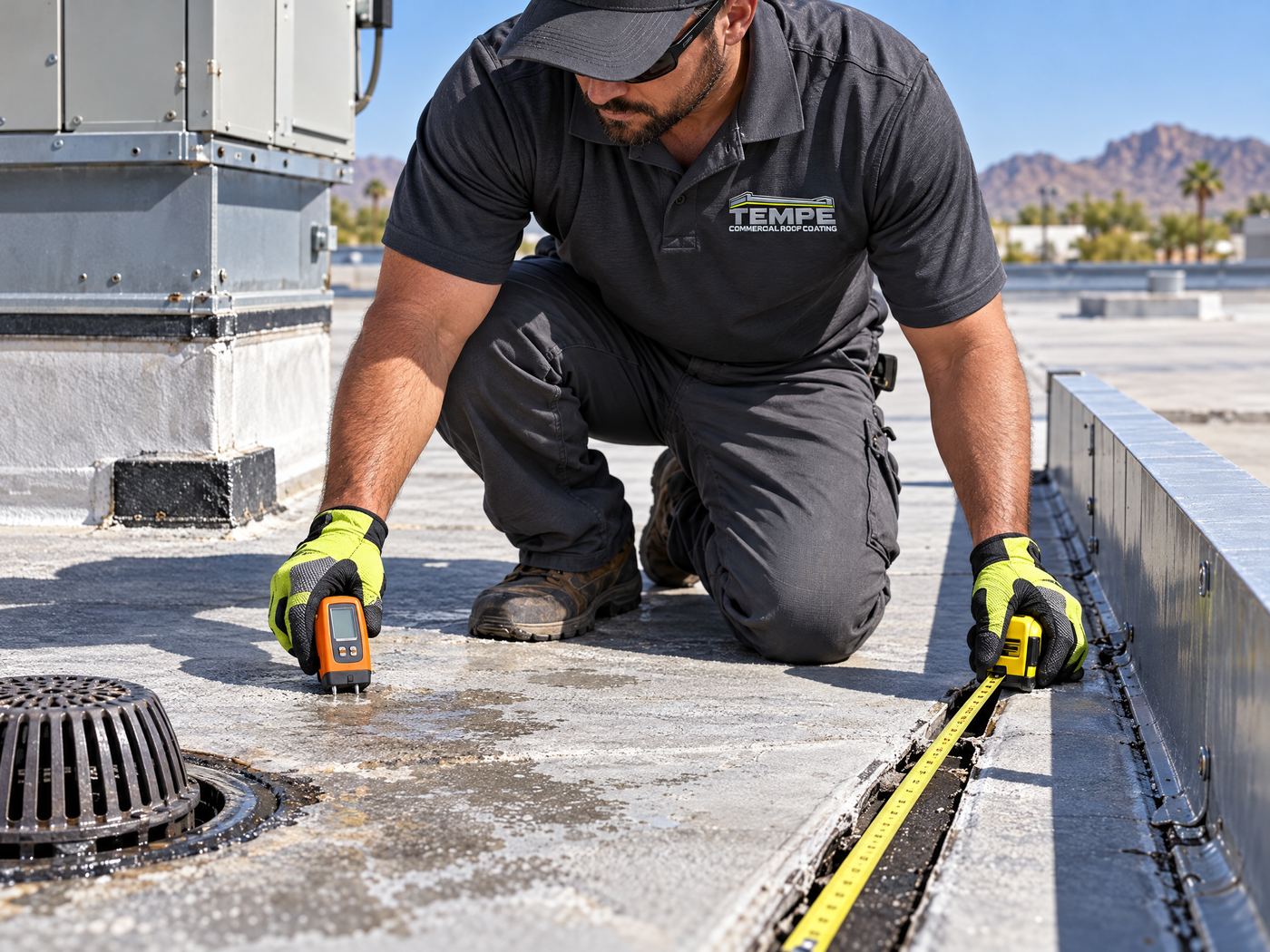
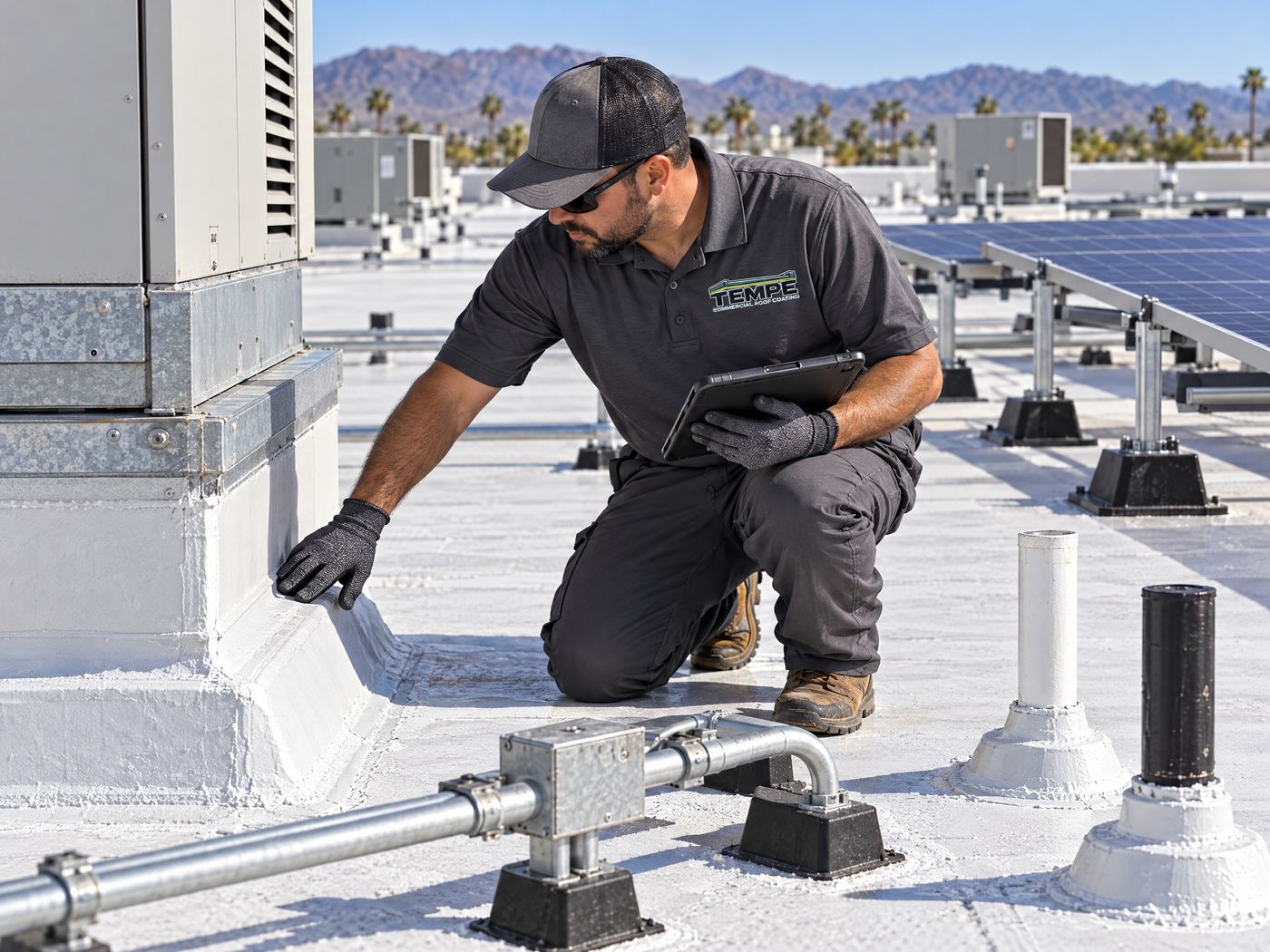
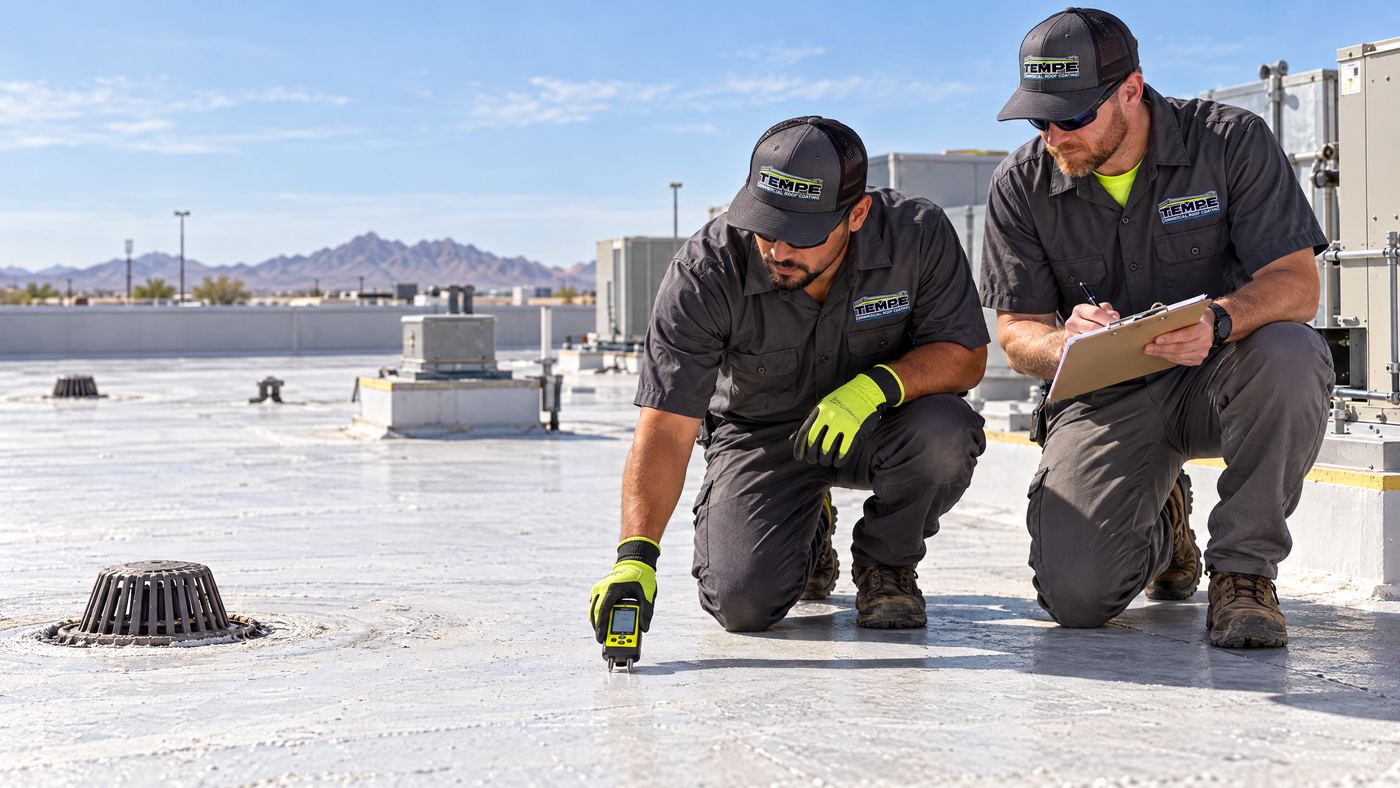
The coating decision starts with visible roof details and the condition beneath them. These checks keep a coating conversation tied to the actual commercial assembly.
Worn tabs, curled corners, missing sections, and heavy granule loss can change the repair or replacement direction.
Wall flashing, step flashing, pipe boots, and edge metal need a attached connection before a coating system reaches them.
Product instructions govern compatible shingles, primers, preparation, application thickness, and detail treatment.
Deck changes, drainage alterations, or structural work can move the project beyond surface coating and into regulated construction.
Coating belongs on a commercial shingle roof only after the assembly, substrate, and repair boundaries support the selected system. The inspection separates coating candidates from replacement conditions.
A replacement call is part of responsible commercial roof service when the shingle field, deck, or flashing network has moved beyond a coating repair.
Use the roof details below to separate an observation from a repair-first condition. Each sign needs an inspection before a coating scope is written.
Raised corners can expose the shingle bond and edge beneath the surface coating.
Open areas need matching roof repairs before any coating work can protect the field.
Granules collected at drains or gutters can signal surface wear across a larger section.
Visible fastener heads need a detail repair that matches the shingle and flashing assembly.
Open wall flashing, failed pipe boots, and separated edge metal can move water below the shingle field.
Flexible deck sections or ceiling stains point to a condition that coating alone does not address.
Shingle coating is one possible scope within a commercial roof plan. Adjacent roof sections can call for a different system, and each option still depends on inspection and manufacturer instructions.
| System | Best Fit | Roof Detail To Check | Decision Note |
|---|---|---|---|
| Shingle Coating | Compatible, attached shingle field | Granules, tabs, flashing, deck | Use only when the selected manufacturer lists the assembly. |
| Acrylic Coating | Approved low-slope or compatible coated section | Existing coating, seams, cure conditions | Can suit a separate roof section when the substrate and product align. |
| Silicone Coating | Compatible low-slope membrane section | Ponding rings, moisture, bleed-through | Check system compatibility before carrying silicone onto a shingle field. |
| Metal Roof Coating | Adjacent metal panels or trim | Rust bloom, laps, fasteners | A metal section needs its own preparation and coating specification. |
| Spray Foam Roofing | Separate dry deck or low-slope section | Moisture, thickness, HVAC intakes | Foam is a distinct roof assembly decision and does not serve as the default shingle overlay. |
For a suitable commercial shingle assembly, coating can support a defined restoration scope. The benefit depends on repairs, compatibility, application details, and the condition below the shingles.
A compatible coating can help keep an attached, serviceable shingle field in a planned restoration scope after worn areas receive repair.
Prepared flashing, pipe boots, exposed fasteners, and edge transitions can be addressed alongside the approved surface system.
A documented coating and repair record gives facility staff clear points to inspect at shingles, flashing, drains, and penetrations.
Defined roof sections can help organize access near tenant areas, deliveries, HVAC equipment, and other commercial operations.
Call before a coating scope is assumed. We can discuss the visible leak, flashing, roof section, and access conditions with your commercial property team.
The work sequence keeps inspection, repair, preparation, coating, and review in order. A roof detail can change the scope at every stage.
Alpha
1INSPECTWe examine shingle tabs, granule loss, flashing, pipe boots, drains, penetrations, interior leak signs, and accessible deck areas. Manufacturer guidance starts the suitability check.
Bravo
2REVIEWWe separate surface coating from drainage changes, deck work, and structural modifications. The City of Tempe Permit Center can confirm requirements for the actual commercial project.
Charlie
3REPAIRLoose shingles, failed flashing, exposed fasteners, debris, and surface contamination are handled according to the selected system. Soft or wet roof areas receive a separate decision.
Delta
4COATApplication follows the product instructions for coverage, thickness, detail treatment, weather conditions, and protection around HVAC equipment, access paths, and tenant operations.
Echo
5REVIEWWe check the coated shingle field, flashing transitions, penetrations, edges, drainage points, and repair records so the facility team knows which details need future attention.
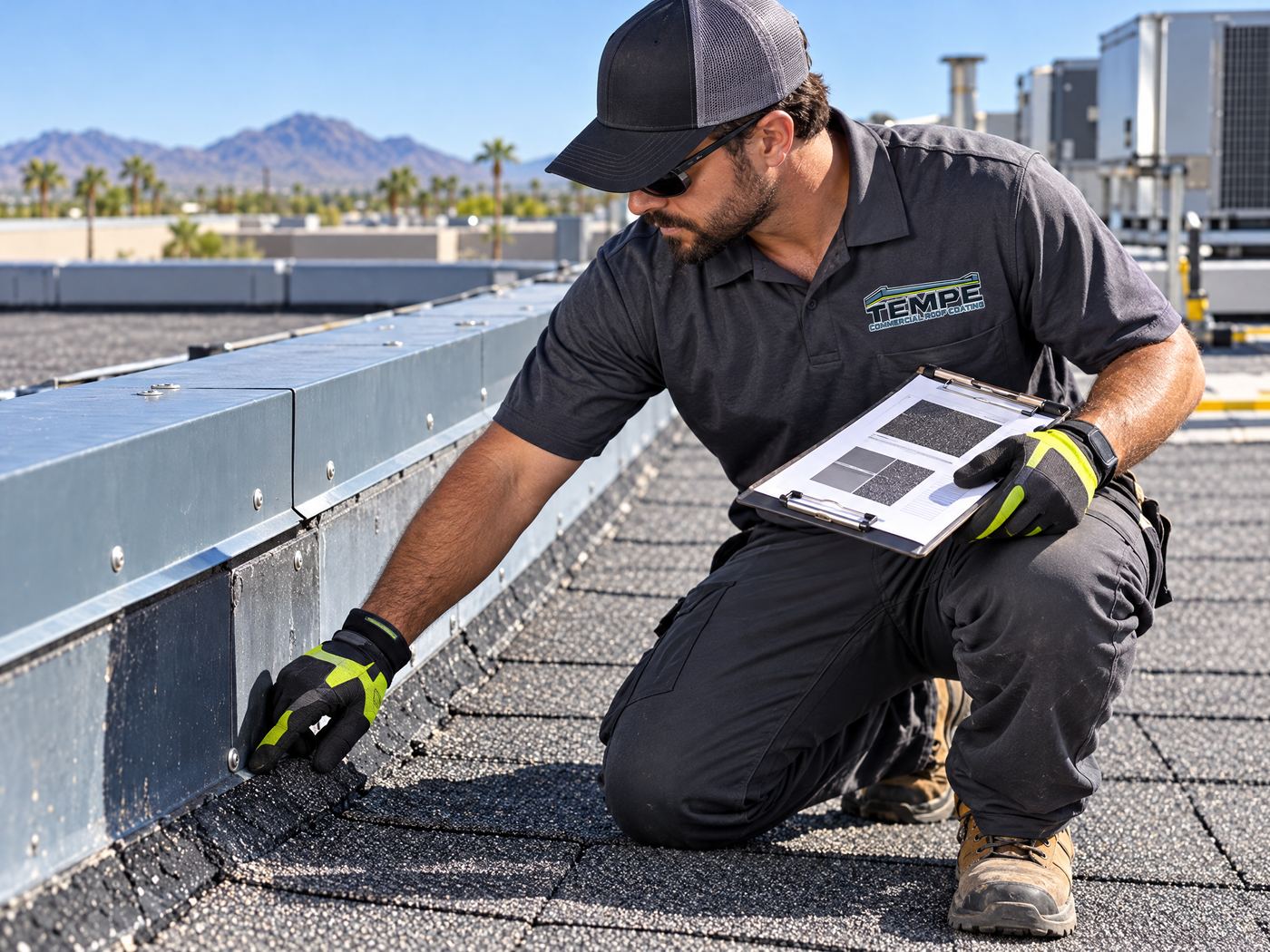
Inspection keeps the coating scope tied to the roof assembly.
A commercial property can have more than one roof assembly. These services can fit adjacent sections after the shingle inspection identifies their substrate and repair needs.
Alpha
For adjacent metal panels, we inspect rust bloom, open laps, fasteners, and pipe flashing before specifying preparation and coating.
Metal Roof Coating In TempeBravo
For compatible low-slope areas, acrylic selection depends on the existing coating, exposed asphalt, detail fabric, and application conditions.
Acrylic Roof Coating In TempeCharlie
Review the full commercial service range when one property has shingles, metal panels, low-slope membranes, or separate foam-ready sections.
Commercial Roofing Services In TempeCommercial shingle coating depends on the assembly, the roof details, the selected product, and the work scope. These answers outline the decisions owners and facility managers should make before coating.
No. The shingle field, roof deck, flashing, moisture conditions, and product guidance all affect suitability. Attached shingles with manageable wear can enter a coating review, while widespread brittleness, missing sections, soft deck areas, or recurring water entry can point toward repair or replacement. We inspect each roof section before recommending a coating scope. ReviewShingleRoofCoati.
Manufacturer guidance sets the boundary for a usable system. It can identify compatible shingle assemblies, cleaning methods, primers, detail materials, coverage, and application conditions. We compare those instructions with the roof in front of us. If the assembly or condition falls outside the guidance, the recommendation shifts to repair, another system, or replacement. ReviewShingleRoofCoati.
Yes, broad granule loss can change the decision. Granules collected around drains, scuppers, or roof edges show that the shingle surface is wearing. We check whether the loss is localized or spread across the field, then inspect tabs, underlayment exposure, flashing, and deck conditions. A coating is considered only after the underlying assembly supports it. ReviewShingleRoofCoati.
Failing flashing receives repair attention before the main coating. ReviewShingleRoofCoati.
Wall transitions, pipe boots, step flashing, and edge metal each control a water path that a broad surface layer cannot replace. ReviewShingleRoofCoati.
We identify the failed connection and determine compatible repair materials. ReviewShingleRoofCoati.
The detail is included in the scope. ReviewShingleRoofCoati.
Persistent leakage around a penetration can require a larger replacement decision. ReviewShingleRoofCoati.
Replacement deserves consideration when damage reaches the shingle field, deck, or flashing network across broad areas. Soft decking, wet materials, widespread missing or brittle shingles, repeated interior stains, and excluded manufacturer conditions all weigh against coating. We explain the observed condition so the owner can compare a repair scope with a replacement direction. ReviewShingleRoofCoati.
Yes. A commercial building can have shingle sections beside metal panels or low-slope membranes, with each area carrying different preparation and product requirements. We inspect the sections separately, document their connections and drainage, and keep the coating scope tied to each substrate. One section can receive repair or coating while another moves toward replacement. ReviewShingleRoofCoati.
The requirement depends on the actual scope of work. ReviewShingleRoofCoati.
The City of Tempe's Building Safety Division reviews commercial projects and handles building permits, with plan review applying to certain types of construction and modifications. ReviewShingleRoofCoati.
The actual scope controls the review. ReviewShingleRoofCoati.
A coating project that includes structural changes or other regulated work can have different requirements from surface maintenance. ReviewShingleRoofCoati.
Confirm the specific project with the city's Permit Center before work begins. ReviewShingleRoofCoati.
Share the roof section, visible damage, and operating constraints. We will start with suitability and keep repair or replacement boundaries in view.
Roof Callback
Share your name and phone number. You can also call +1 (623) 310-0178 directly.