Blocked Equipment Path
Stored materials or tight clearances around an HVAC curb can limit surface preparation. Mark the service lane before staging buckets, hoses, or tools.
Rooftop equipment changes where people can walk, stage materials, prepare the surface, and apply coating. We inspect those constraints before recommending a commercial roof coating system.
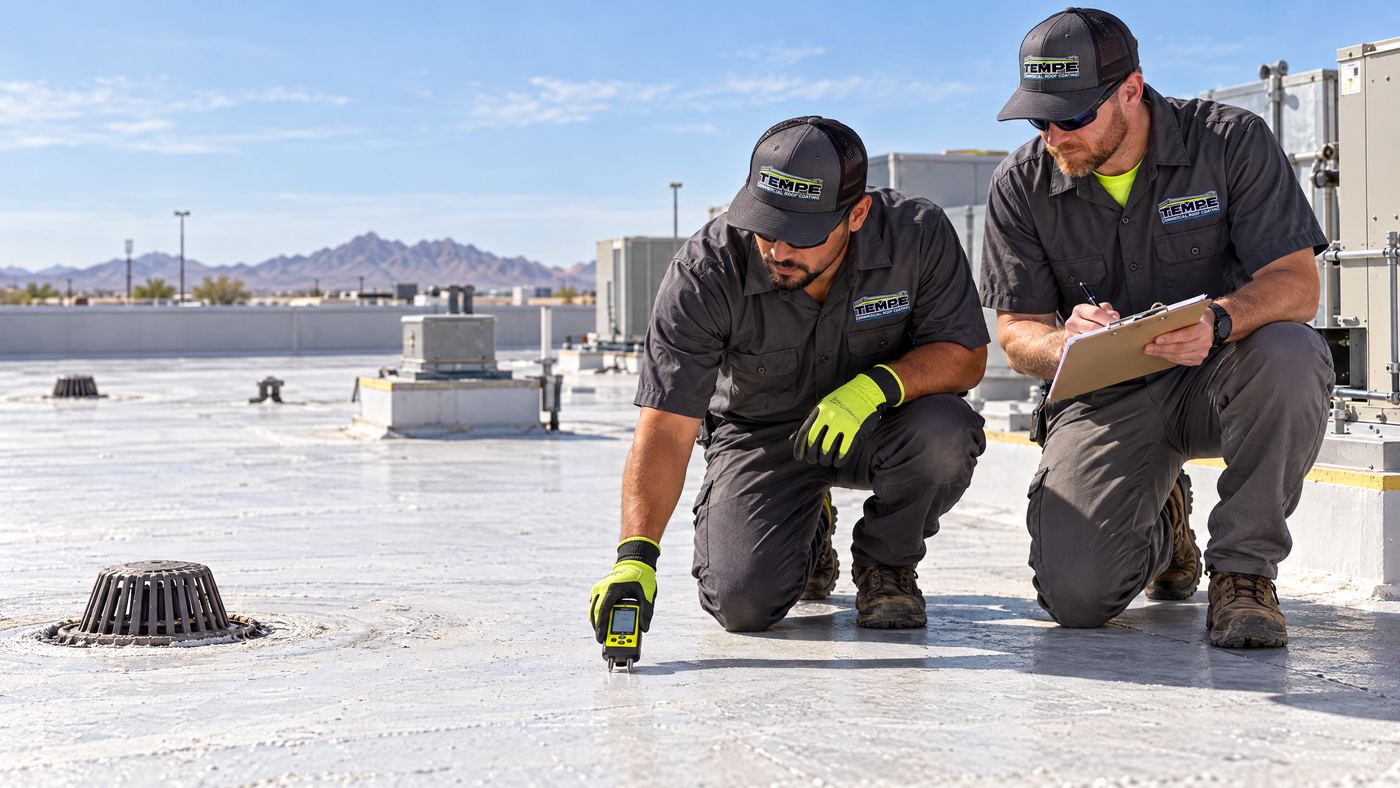
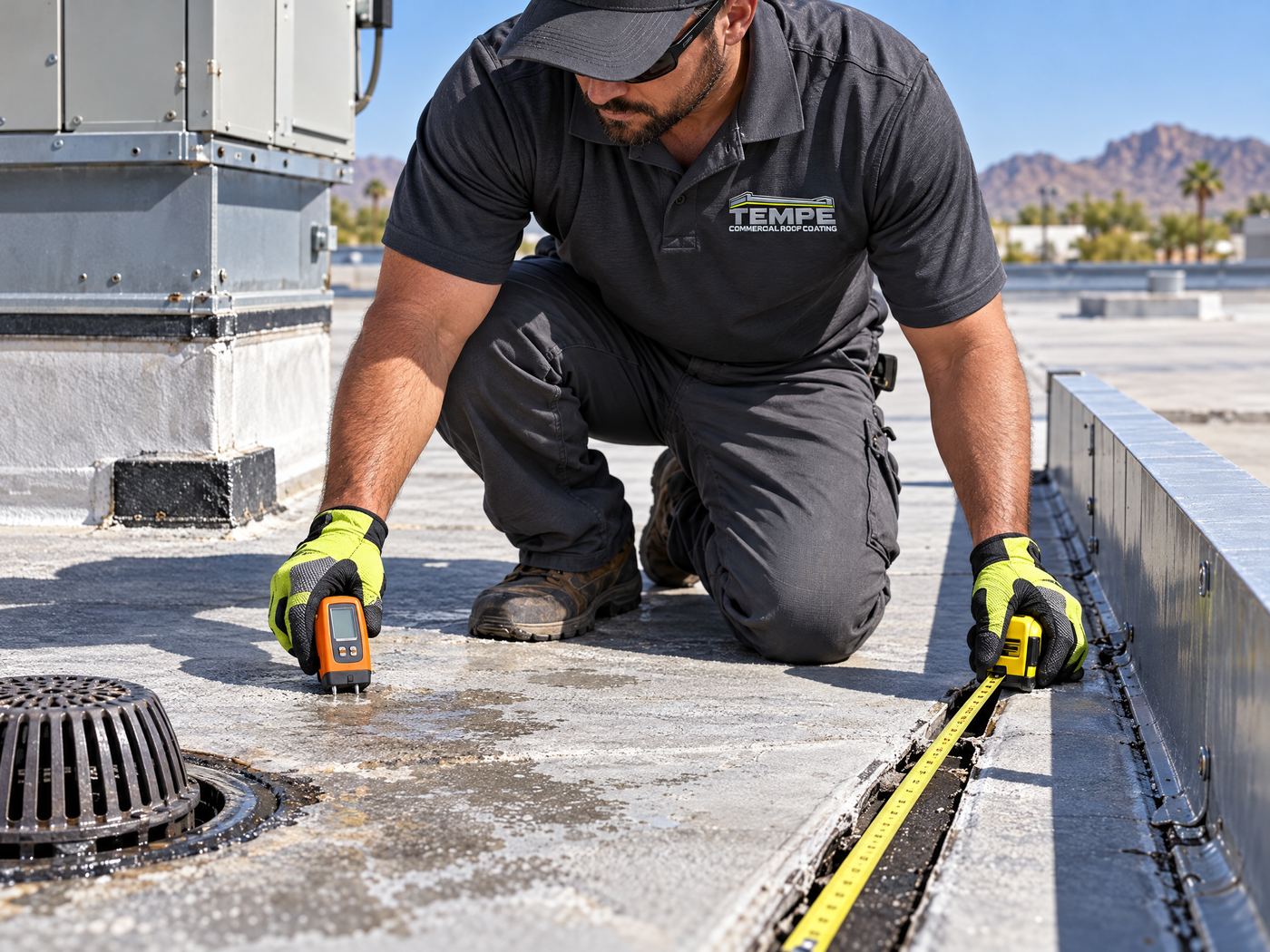
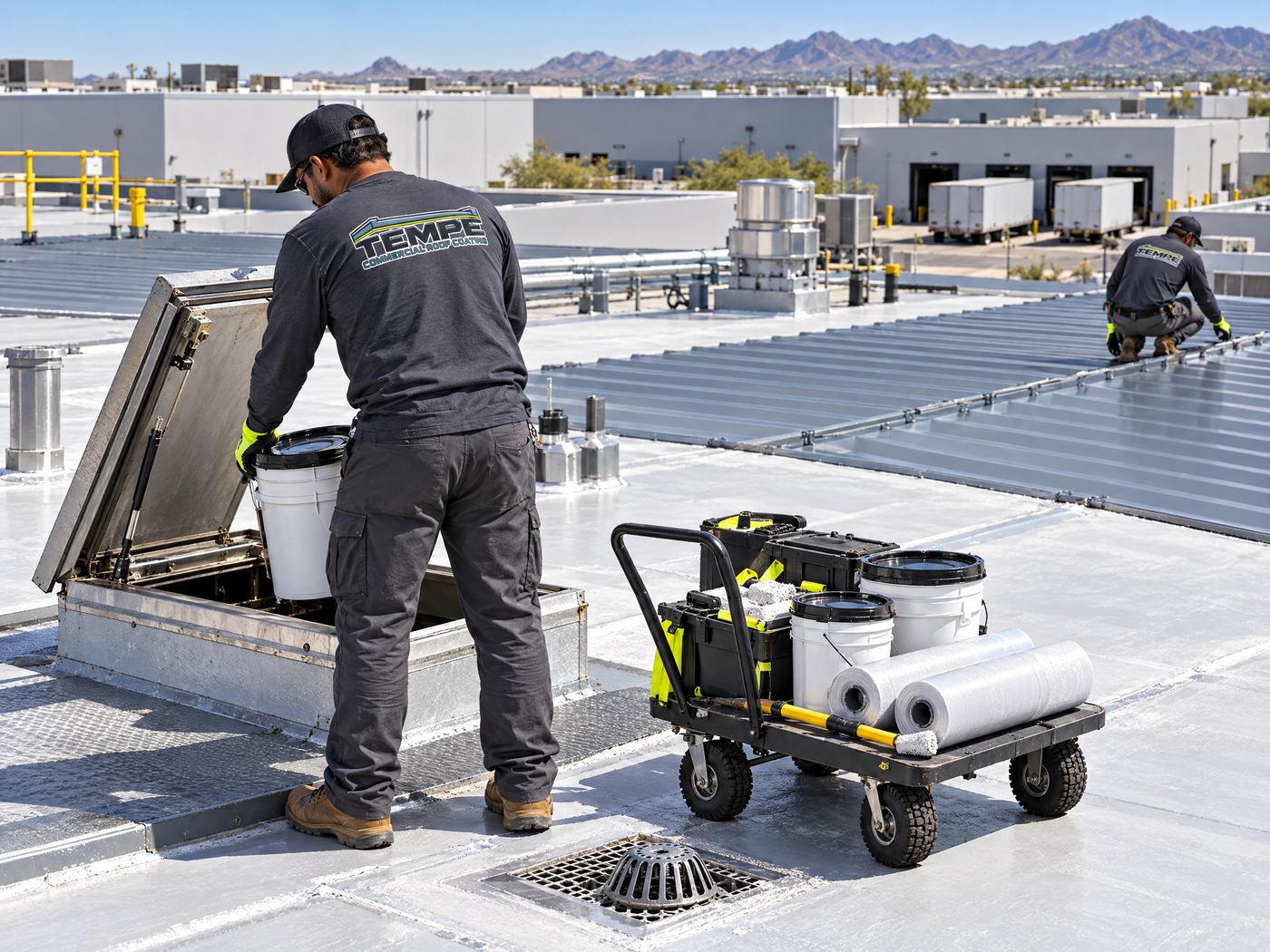
Solar arrays, air-conditioning units, cable runs, and pipe supports divide a commercial roof into working zones. The coating plan must account for each zone and the people who service it.
We inspect accessible membrane or panels, then trace how a technician reaches each curb, mount, conduit, drain, and penetration. That review separates coating-ready areas from details that need repair, reinforcement, or a different treatment.
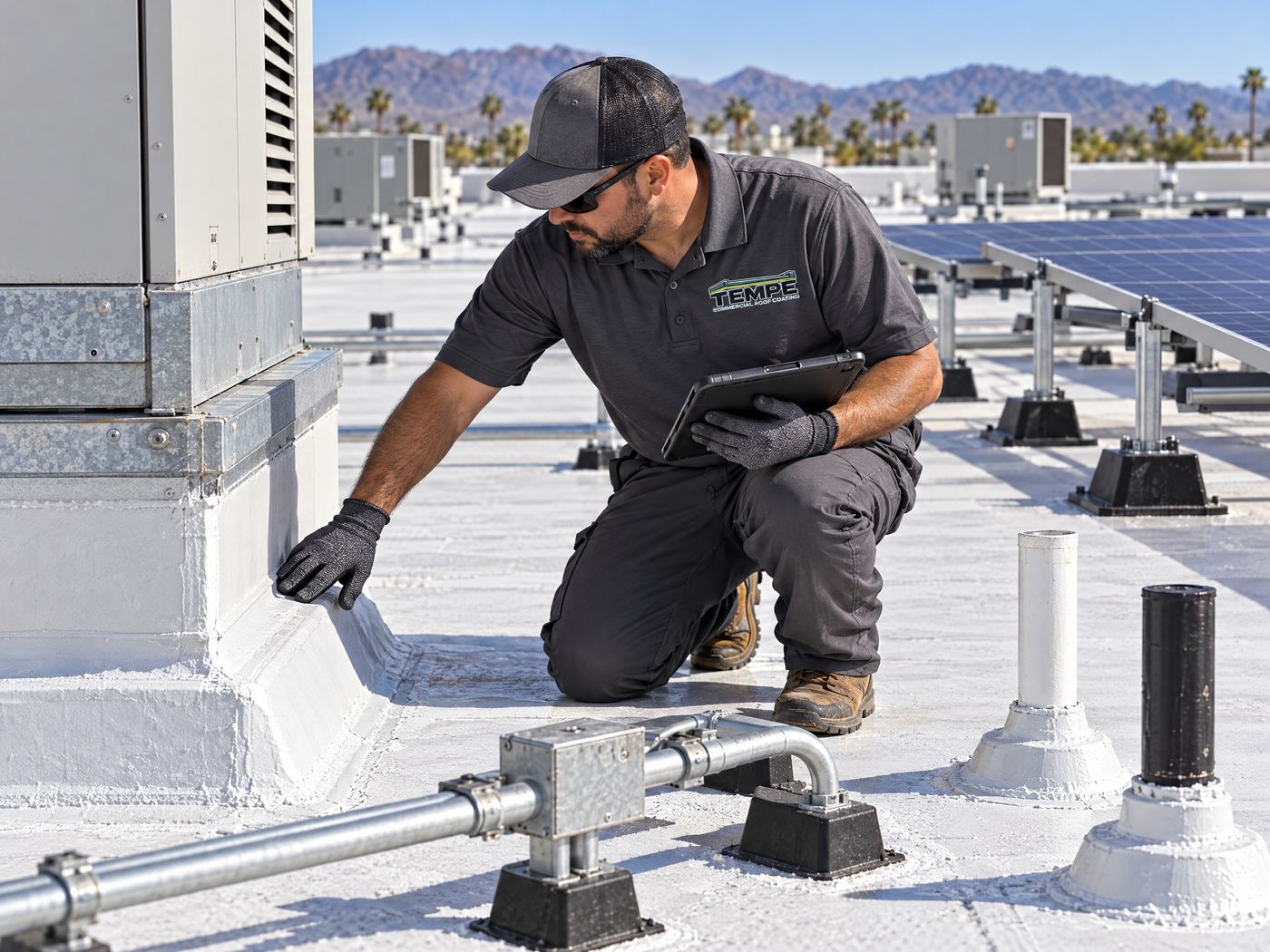
Use visible roof details to sort routine watch items from conditions that need repair before coating. Each finding changes the work area or the preparation sequence.
Stored materials or tight clearances around an HVAC curb can limit surface preparation. Mark the service lane before staging buckets, hoses, or tools.
Gaps at a solar support, pipe stand, or conduit boot can let water reach the roof assembly. Repair the connection before covering the surrounding surface.
Separated curb flashing, cracked sealant, or a stained interior edge points to a detail that needs attention before a field coating is applied.
A ceiling stain or wet area below an antenna, electrical conduit, or pipe penetration needs source tracing. Coating alone cannot define the failed connection.
Ponding rings near a panel row, curb, or drain deserve a drainage check. The coating plan should preserve flow and keep drains and overflow paths open.
Locked gates, escort rules, or equipment exclusion zones can prevent preparation around part of the roof. Set the approved route before selecting the application method.
A coating system can support planned roof work when the existing assembly, repairs, and access plan all fit the selected product.
Inspection-led coating work brings mounts, curb edges, pipe supports, and penetrations into the same roof decision instead of treating the open field as the whole project.
Marked walk lanes and protected HVAC access help facility teams keep recurring equipment service points visible after the roof surface is coated.
Access rules, electrical runs, and air-handling locations inform staging and application choices around an occupied commercial property.
Loose flashing, wet materials, and failed seals stay visible as repair items rather than being hidden beneath a general coating pass.
The roof material, moisture condition, equipment layout, and detail access guide system selection. These services fit different roof decisions.
Alpha
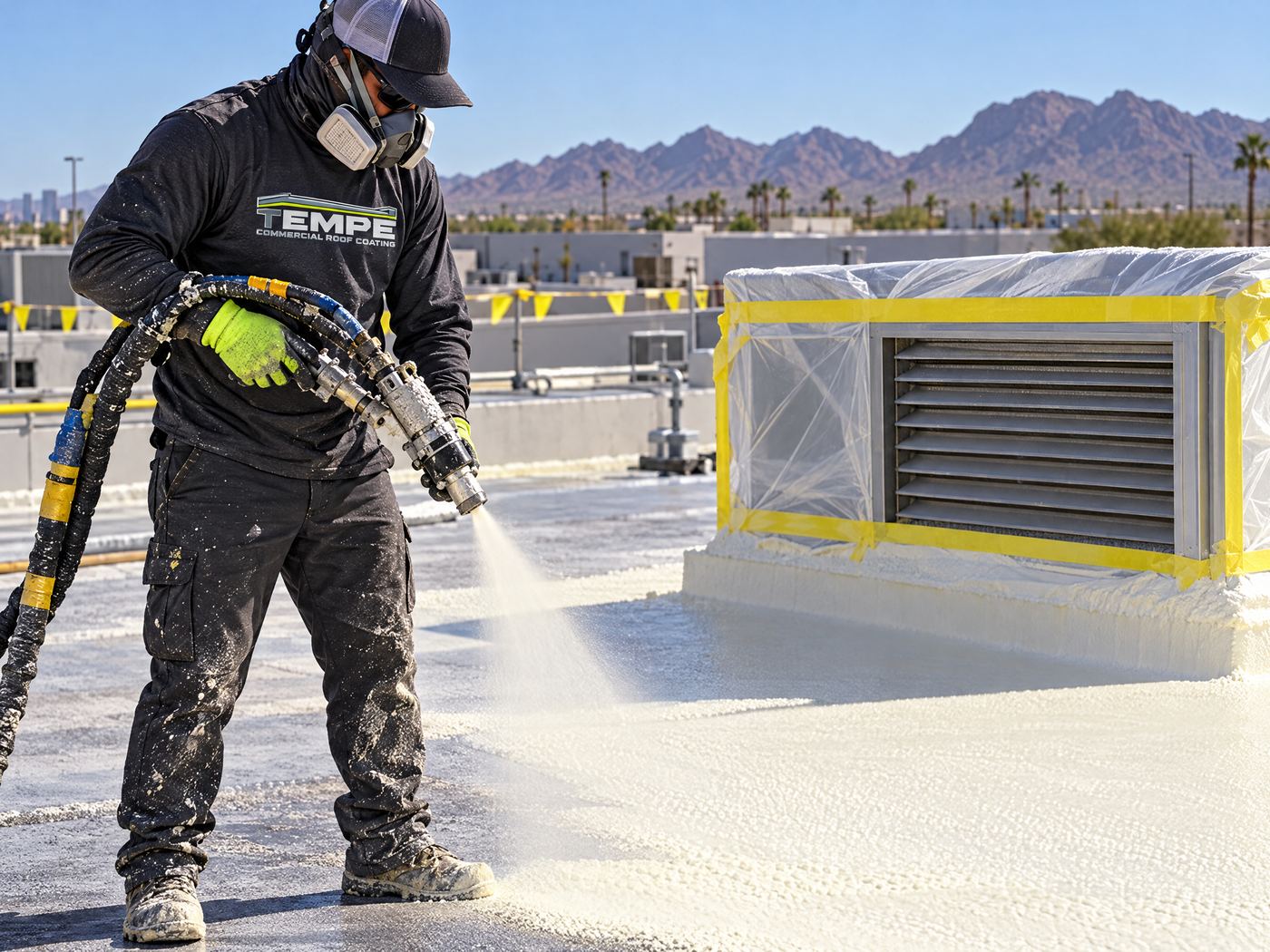
Dry, prepared substrates and controlled application matter around HVAC curbs, pipe stands, and tight penetrations.
Explore Spray Foam RoofingBravo
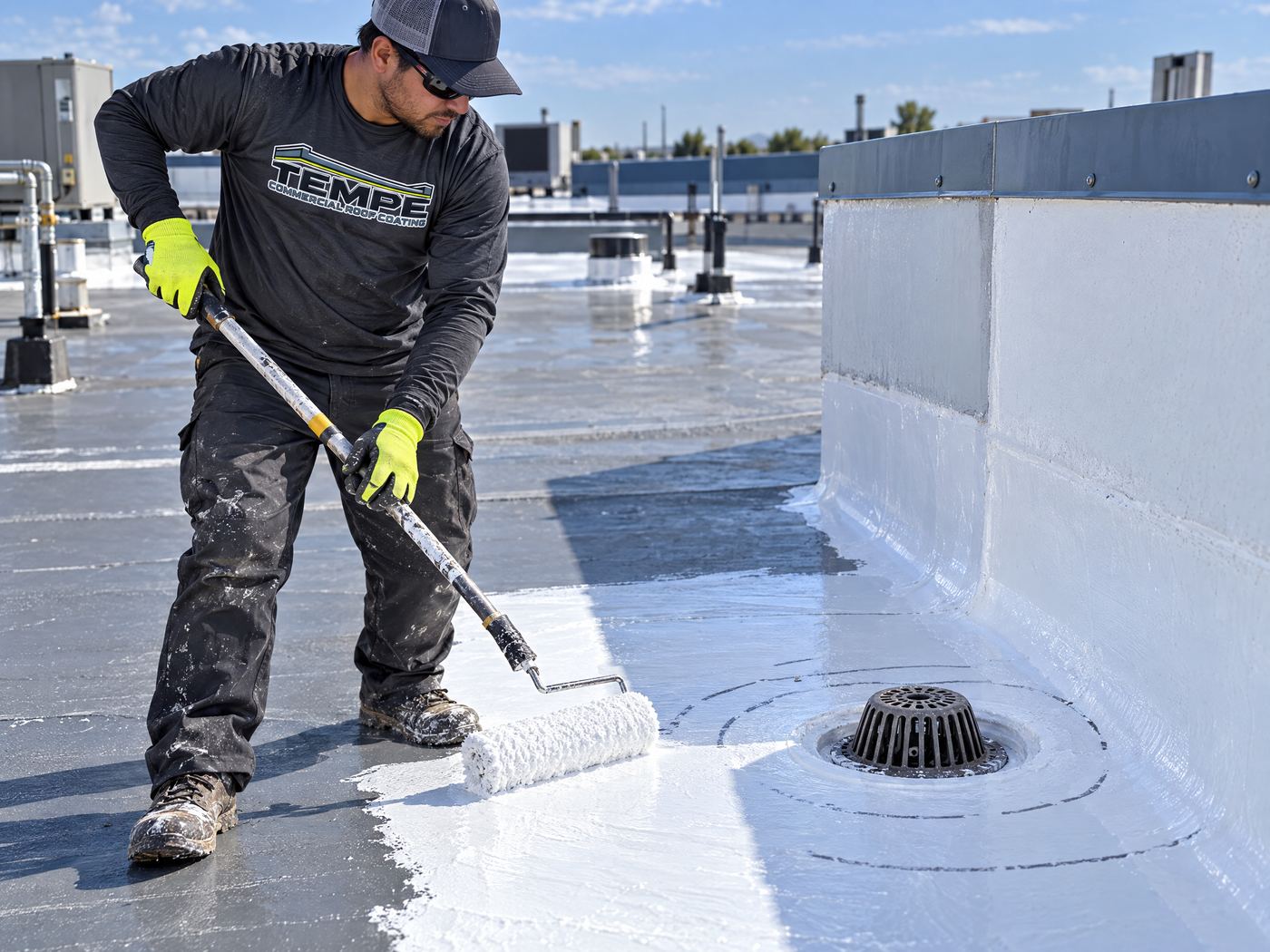
Low-slope roofs with ponding concerns need moisture checks, compatible preparation, and careful work around supports.
Explore Silicone Roof CoatingCharlie
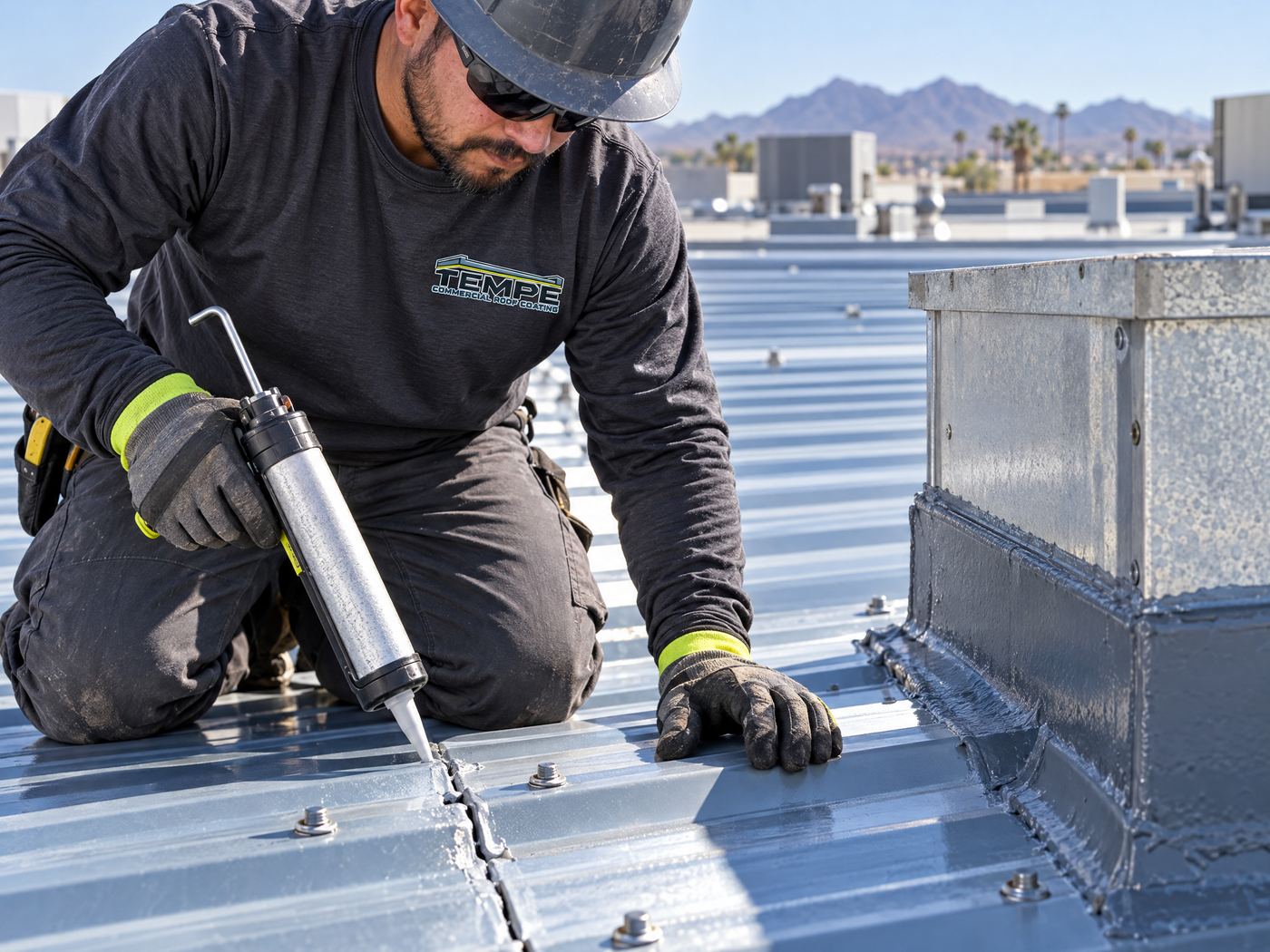
Panel laps, fasteners, rust bloom, and conduit boots require repair and preparation before a metal roof coating pass.
Explore Metal Roof CoatingCall with the equipment layout, access rules, and roof detail causing concern so the next roofing decision starts with the right constraints.
The work sequence keeps equipment access and repair boundaries visible before material reaches the roof.
Alpha
DAY 1We map solar mounts, HVAC curbs, conduits, pipe supports, drains, seams, and roof transitions. The inspection also records access restrictions and areas that need protection.
Bravo
SCOPEOpen flashing, loose fasteners, failed boots, wet materials, and damaged membrane receive a repair decision before coating work covers nearby roof areas.
Charlie
PREPCleaning, adhesion checks, detail reinforcement, and protected paths prepare the surface around panel supports, curb edges, conduits, and drains.
Delta
COATApplication follows the selected product requirements and the approved access plan. Crews keep air intakes, electrical equipment, service lanes, and drainage points in the work scope.
Echo
REVIEWFinal checks look at coverage, coating thickness, penetrations, curb flashing, drains, and walk paths so facility staff can see what remains available for service.
Commercial roof coating work can be considered across the approved Tempe-area service coverage, with the roof condition and access plan setting the scope.
These answers address the rooftop details that can change preparation, application, and repair decisions around a commercial property.
Possibly, but the panels and their mounting systems need to be considered during inspection and planning. Restricted access can affect surface preparation and coating around the supports. We determine how the accessible roof areas and panel connections can be handled before work begins. ReviewSouthMountainRoo.
HVAC curbs and service lanes are mapped before preparation starts. The inspection checks curb flashing, nearby seams, air intakes, equipment access, and protection needs. The work sequence then keeps technicians' paths and roof details available for the selected coating system. ReviewSouthMountainRoo.
Each support and penetration is inspected for gaps, damaged flashing, failed sealant, and signs of water entry. Required repairs or reinforcement are completed with compatible materials before the surrounding roof surface receives the main coating. ReviewSouthMountainRoo.
Yes. Access procedures should be discussed before scheduling. Share security checkpoints, escort requirements, restricted roof zones, approved working hours, and equipment rules so the roof path and staging plan fit the building's operating requirements. ReviewSouthMountainRoo.
Equipment replacement should be disclosed before roofing work is scheduled. Removing or installing a unit can disturb curb flashing and the surrounding coating. Coordinating the roof scope with planned equipment work helps keep new repairs visible and limits later cuts into the coated surface. ReviewSouthMountainRoo.
Cleaning can expose damaged seams, loose materials, or defects hidden by dirt and old surface layers. The affected area is assessed before coating continues. We identify the needed repair and decide if that section can be repaired and restored within the planned roof scope. ReviewSouthMountainRoo.
Share the roof material, equipment layout, penetrations, and access rules. We will inspect the commercial roof and explain the next coating decision.
Roof Callback
Share your name and phone number. You can also call +1 (623) 310-0178 directly.