Commercial Roof Coating

Roof Coating Company Tempe

We coat commercial roofs after checking the details that control preparation, repair, and system fit.

  • Recurring leaks: Ceiling stains and active water entry send the inspection toward flashing, seams, drains, and penetrations.
  • Open seams: Loose membrane laps and separated metal panel joints need attention before a coating can bridge the surface.
  • Wet insulation: Moisture beneath the roof covering changes the restoration decision and the area that can be coated.
  • Blocked drains: Drain bowls, scuppers, and ponding rings show how water is moving across each roof section.
  • Damaged penetrations: Pipe boots, conduit supports, and HVAC curbs need their own repair boundary.
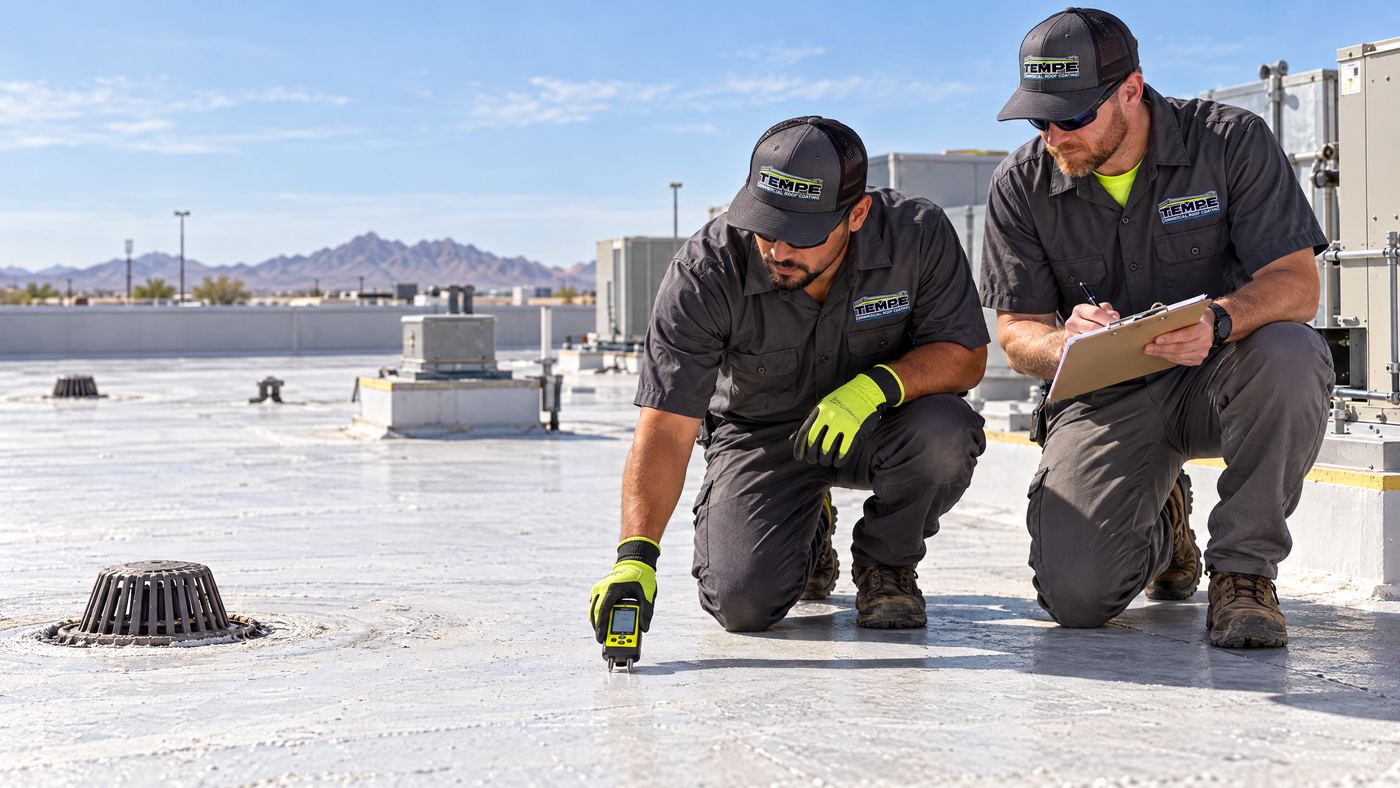
Commercial roof worker inspecting roof details in Tempe, Arizona
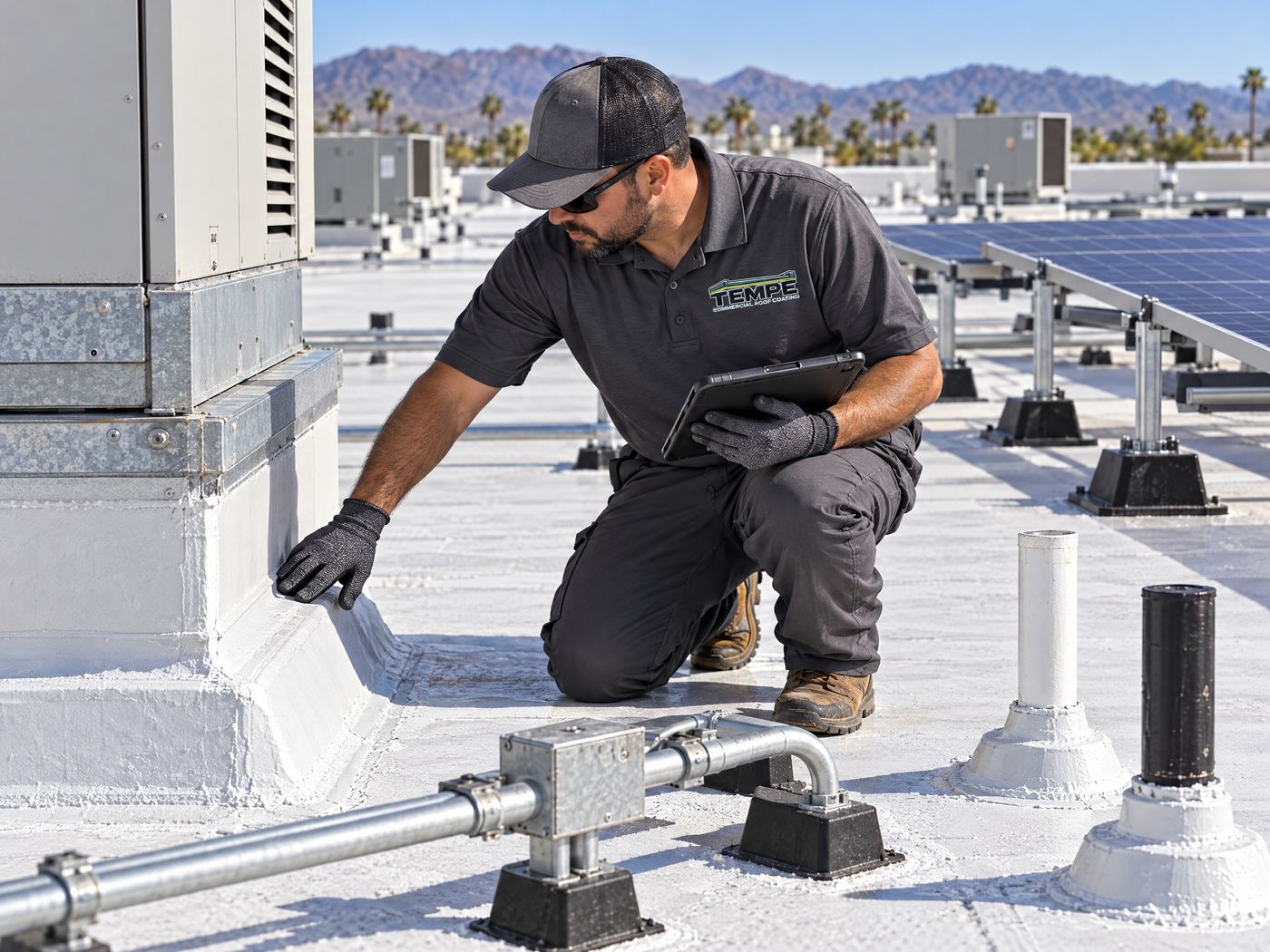
Commercial roof coating preparation around roof seams and flashing
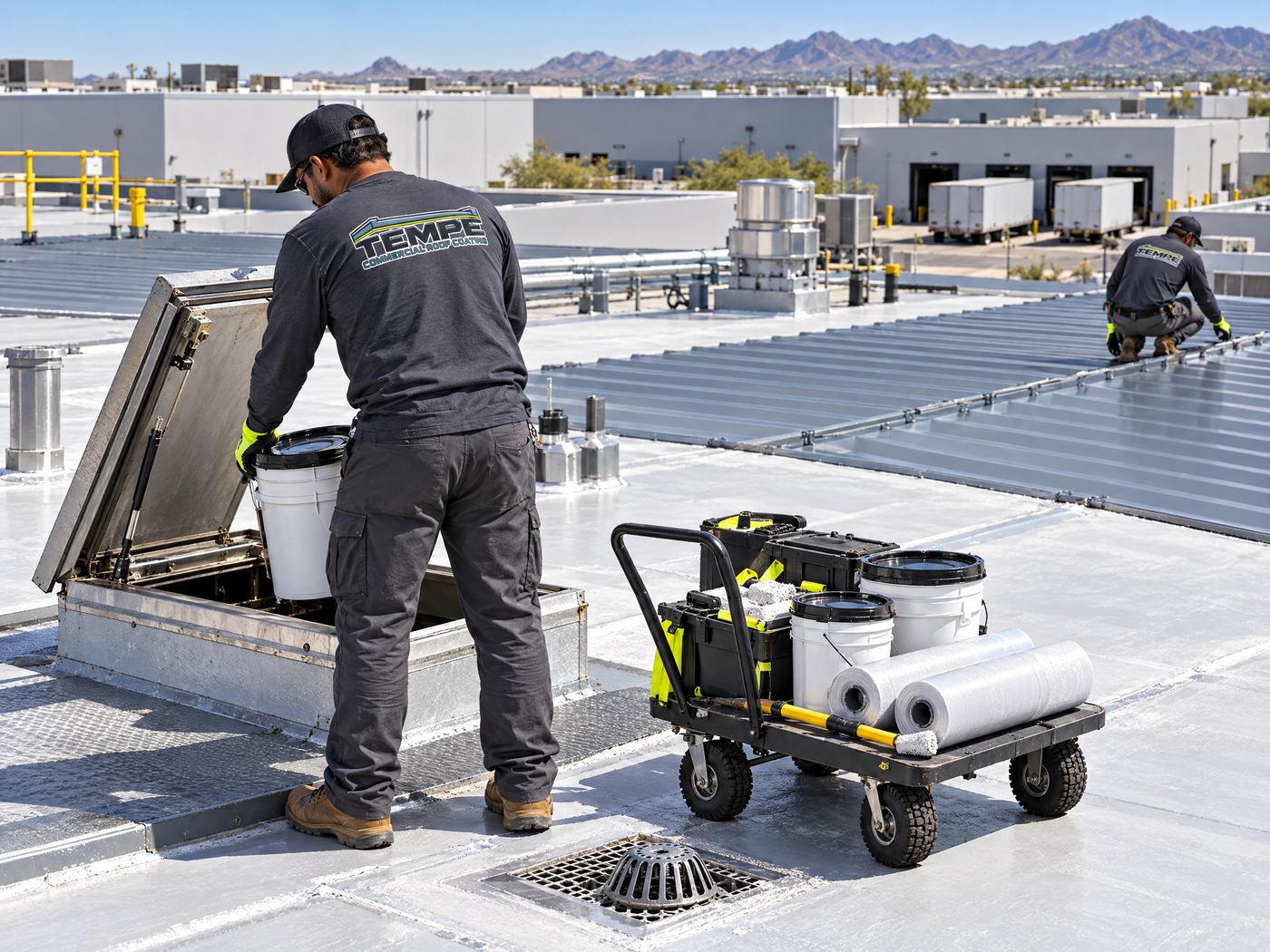
Commercial roofing worker coordinating rooftop equipment access
Inspection-Led Approach

Separate Roof Facts From Product Choice

A coating decision follows the roof evidence. We inspect each section, record what needs repair, and then select a compatible commercial roof coating system.

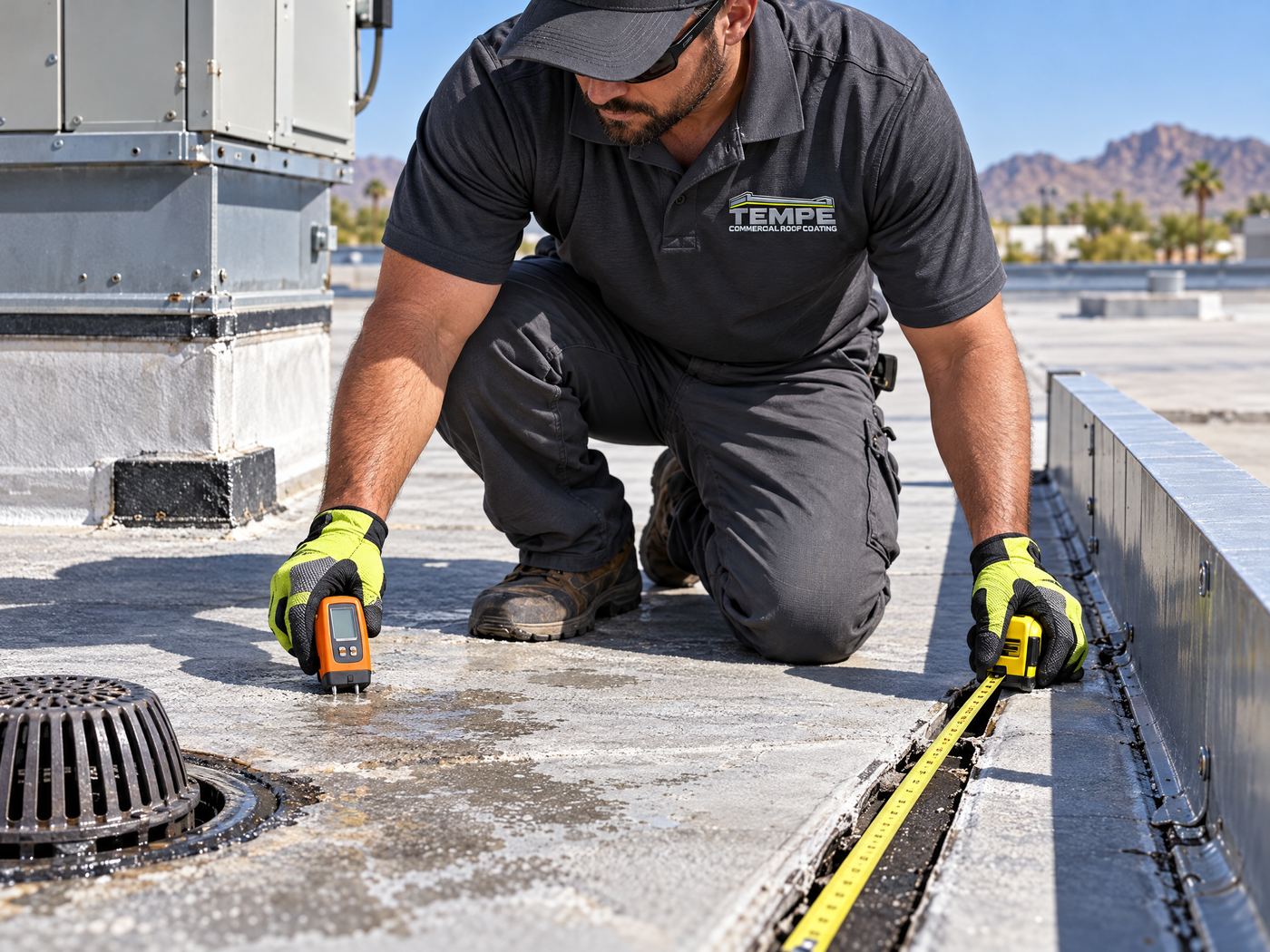
Commercial roofing professional inspecting an open seam beside a rooftop HVAC curb
Roof details guide the work sequence.

One building can contain several roof sections, repair histories, and materials. Metal panel laps, membrane seams, asphalt surfaces, and existing coatings each call for different preparation questions. We keep those sections visible instead of treating the roof as one uniform sheet.

Moisture, drainage, and attachment come before product selection. A soft area near a drain, a loose flashing edge, or a coating that is peeling from the substrate can move a section into repair-first work. A dry, attached surface with attached details can move toward coating preparation.

  • Records help: Repair notes, roof plans, prior product information, and leak locations add useful context.
  • Roof access matters: HVAC service paths, electrical conduits, air intakes, and tenant operations shape staging.
  • Selection follows fit: Metal, silicone, acrylic, spray foam, and shingle coating each serve different roof conditions.

Roof records, leak patterns, and access details help us plan commercial roof coating work around the building.

Roof Decision

A Roof Needs A Clear Next Step

Recurring leaks, ponding rings, and wet insulation deserve a direct conversation about repair boundaries and coating suitability.

Call About Your Commercial Roof+1 (623) 310-0178
Call Us
Inspection Checklist

What We Check On A Commercial Roof

The inspection follows water paths, roof layers, and work constraints so each section has a defined next step.

Seams And Fasteners

Open membrane seams, panel laps, loose fasteners, and rust blooms show where water entry or movement can begin.
Moisture And Insulation

Wet insulation, soft spots, blistering, and interior ceiling stains can point below the visible roof covering.

Drains And Scuppers

Drain bowls, scuppers, overflow paths, and ponding rings reveal whether water can leave the roof after coating.

Penetrations And Curbs

Pipe boots, conduit supports, skylight edges, and HVAC curbs receive a separate check for flashing gaps and sealant failure.

Edges And Transitions

Parapet flashing, edge metal, expansion joints, and roof-height changes can set the boundary for repair work.

Existing Coating Layers

Peeling areas, chalking, unknown products, and weak adhesion determine whether cleaning, testing, or removal comes first.

Equipment And Access

Rooftop units, air intakes, service paths, tenant areas, and delivery routes affect staging and application controls.

Work Boundaries

What We Will Not Do

Commercial roof coating work needs clear boundaries. These limits keep the inspection, repair scope, and product choice tied to the roof in front of the property team.

Keep Claims Grounded

  • Promise a warranty before the product system, contractor scope, and applicable terms are attached to the actual commercial roof work.
  • Quote savings or a service schedule before roof conditions, access rules, repair boundaries, and weather-sensitive work windows are known.
  • Treat a wet deck or damaged HVAC curb as coating-only work when the roof assembly needs a separate repair decision.
  • Present a generic product as compatible before checking existing roof layers, adhesion, moisture findings, and detail transitions.
  • Use a coating scope to disguise structural deck damage, widespread membrane failure, or drainage redesign that needs separate review.
  • Describe the roof as ready for application before cleaning, adhesion checks, moisture checks, and detail preparation are complete.
  • Use a quick visual pass as a substitute for checking seams, drains, penetrations, interior reports, and access conditions.
  • Treat a product label as a roof plan when the building has mixed materials or separate roof levels.
  • Assume tenant operations, security escorts, or equipment shutdowns can be ignored during preparation.
  • Use the inspection record to identify access limits, equipment protection, and the roof sections included in the estimate.
  • Keep coating decisions tied to the assembly, repair history, surface preparation, and conditions recorded at the property.

Keep The Scope Clear

  • Use a coating to cover open seams, failed flashing, trapped moisture, or loose materials that should be addressed before application.
  • Leave drains, equipment paths, tenant areas, roof access, or repair boundaries out of the written work plan for the building.
  • Describe a roof section as ready before cleaning, adhesion, moisture, and compatibility checks are complete for that assembly.
  • Fold structural changes, drainage redesign, or deck work into a surface-coating allowance without identifying those separate conditions.
  • Treat multiple roof assemblies as one surface when metal, membrane, asphalt, foam, or shingle sections require different preparation.
  • Move repair findings into a later conversation instead of recording the affected roof section, access concern, and next inspection step.
  • Set a single coating answer when one roof section needs repair, drying, or a separate compatibility test.
  • Call a repair complete while leaks, ponding, loose materials, or flashing transitions remain unresolved.
  • Leave the property team without a clear record of the roof sections reviewed and the next check.
  • Record drainage points and transitions so the finished coating work can be reviewed during future facility checks.
  • Separate product selection from repair approval when the building team needs another trade or a different scope.

We inspect, repair, prepare, and coat commercial roofs in Tempe. The estimate follows the roof condition and the limits recorded for each section, so the property team can see what controls the next step.

Commercial Roof Coating

Get A Roof Decision Based On The Details

Bring the roof records you have, describe the leak pattern, and request an estimate for inspection-led commercial roof coating work in Tempe.

Commercial roof coating in TempeCall Us